A Jewish Traveler's Guide to Helsinki and Tallinn: Kosher, Shabbat & Hidden Gems
Have you ever thought of traveling to a destination a little more overlooked than Berlin or London? Perhaps you've always wanted to, but planning a Jewish-friendly trip to a destination with limited kosher infrastructure felt intimidating. If this sounds like you, then keep reading, because I’m about to reveal the ultimate hidden spot in northern Europe, and show you that keeping kosher and Shabbat there is much more manageable than you might expect.
On opposite sides of the Gulf of Finland lie two capital cities worth exploring. You get to have a peek at some smaller Jewish communities with a rich yet seldom explored history, a magnificent old town, a culture driven by the contrasting seasons, and two synagogues with historical ties and ongoing kinship. The cities I’m talking about are Helsinki, Finland and Tallinn, Estonia. This is one trip connected by a quick ferry, but two remarkable worlds, each deserving full days of exploration.
First, Helsinki. Having explored Helsinki on numerous occasions myself, I can say with certainty that this city has a lot to offer from nature, historical landmarks, and a warm Jewish community. You may ask, how many Jews actually live in Finland? Is it possible to keep kosher during your visit?
Well, nowadays there is a community with about 1,500-1,800 Jews in Finland, but it wasn’t always like that. In fact, when Finland was under Swedish rule (12/13th century - 1809) and when Finland was ruled by Russia (1809-1917) Jews were generally prohibited from settling there. That is, unless they served in the cantonist army for 25 years, giving them special permission. That’s how the first permanent Jews communities in Finland began to take shape. Eventually the population grew and the synagogue was erected in 1905. Today that resilient community welcomes visitors from all over the world. While it’s small, its hospitality isn’t limited and you’ll be able to attend the active synagogue, have kosher food with some planning, and a unique opportunity to explore one of Europe’s northernmost capitals.
Did you know that Helsinki synagogue was the only synagogue to remain open through the Holocaust? Not only did it stay operational, but Jews fought in the Finnish army during the war and even had field synagogues. You can join minyanim there on Friday nights, shabbat mornings, and even on some weekday mornings, although the timing varies. You may even be able to join the community Shabbat dinners or lunches hosted by the synagogue or Chabad center. These events are usually quite cozy and give you the opportunity to learn about what life is like for Jews living in such a far corner of the world, and experience a small part of it yourself. I’d recommend contacting the community staff ahead of time to go through security and sign yourself up for the corresponding events.
Operating from the synagogue premises is also a fully kosher cafe run for and by the community. There you can pick up some dairy baked goods to take along to your next stop or sit and enjoy. Additionally, there is a kosher list online that is used by everyone there, listing all the kosher foods available in the shops.
I'd recommend spending at least three to four full days in Helsinki, not including Shabbat, so you have enough time to explore using public transportation and visit attractions that require payment. One lesser-known spot that I’ve seen tourists miss over and over again is Finland’s fort, Suomenlinna. A short ferry ride will take you to this historical island and then you can freely explore the fort walls surrounding it. There are charming houses along the roads, wooden doors leading you inside the fort, and breathtaking scenery along the shoreline in every season. According to members of Helsinki's Jewish community, Finland's first synagogue once stood on the island. Around 200 Jews lived there, and the story of the synagogue has been preserved through oral tradition within the community, even though little physical evidence remains today. If you're interested in the island's broader military and cultural history, the Suomenlinna Museum is well worth a visit.

Another experience you can’t miss in Helsinki is a true Finnish-sauna experience. The sauna is a Finnish invention and is a ritualistic part of life there. In fact, in the country there are more saunas than cars. If you’re brave, you can try dipping in the freezing sea between sauna rounds during the many months of the year when the sea is frozen.
One thing I always appreciate when I return is how calm Helsinki feels. Even the capital has an unhurried pace that's hard to find in many European cities. If you have time to venture outside of the city, you can’t miss the chance to hike in one of Finland’s national forests. Nuuksio National Park is easily reachable by bus from the city center and offers many trails in Finland’s clean and beloved forest.

Once you’ve spent a couple of days exploring Helsinki, the adventure doesn't have to stop. Just a two-and-a-half hour ferry over the Baltic Sea will take you to a another beautiful city with its own small Jewish community and history.
Did you know that Estonian Jews once held positions such as athletes, doctors, and professors? In fact, in pre-war Estonia, there was a thriving Jewish community in Tallinn. Similarly to Finland, Jews first settled in Estonia as cantonist soldiers. But the later history differs drastically as Estonian Jews weren’t protected during the Holocaust like their northern neighbor. By 1945, fewer than a dozen Jews remained in Estonia after most had fled ahead of the German occupation or were murdered during the Holocaust. The Tallinn Choral Synagogue was destroyed and nothing remained. In the 1990s Tallinn welcomed its first Rabbi since the destruction, and in 2007 the new Synagogue was complete.
During your stay in Estonia, don’t miss a chance to visit this new synagogue. What makes this synagogue so special isn't its age, but what it represents. Rising from the destruction of the Holocaust, it symbolizes the rebirth of Jewish life in Estonia. Every detail was designed intentionally to best serve the community, and you can feel the pride and love the Estonian Jews have for their new synagogue which they waited over fifty years for. In addition to visiting the synagogue, there is a Jewish museum on the premises as well which you can visit to learn more about the country’s Jewish history. If you’re staying there over Shabbat, make sure to reach out to the community members for a chance to join the community meals. The community's small size is more than compensated for by its warm hospitality, making you feel less like a visitor and more like family. Additionally, you can request meaty meals from the community’s own restaurant/catering service which makes keeping kosher much easier when you’re looking for a warm meal.
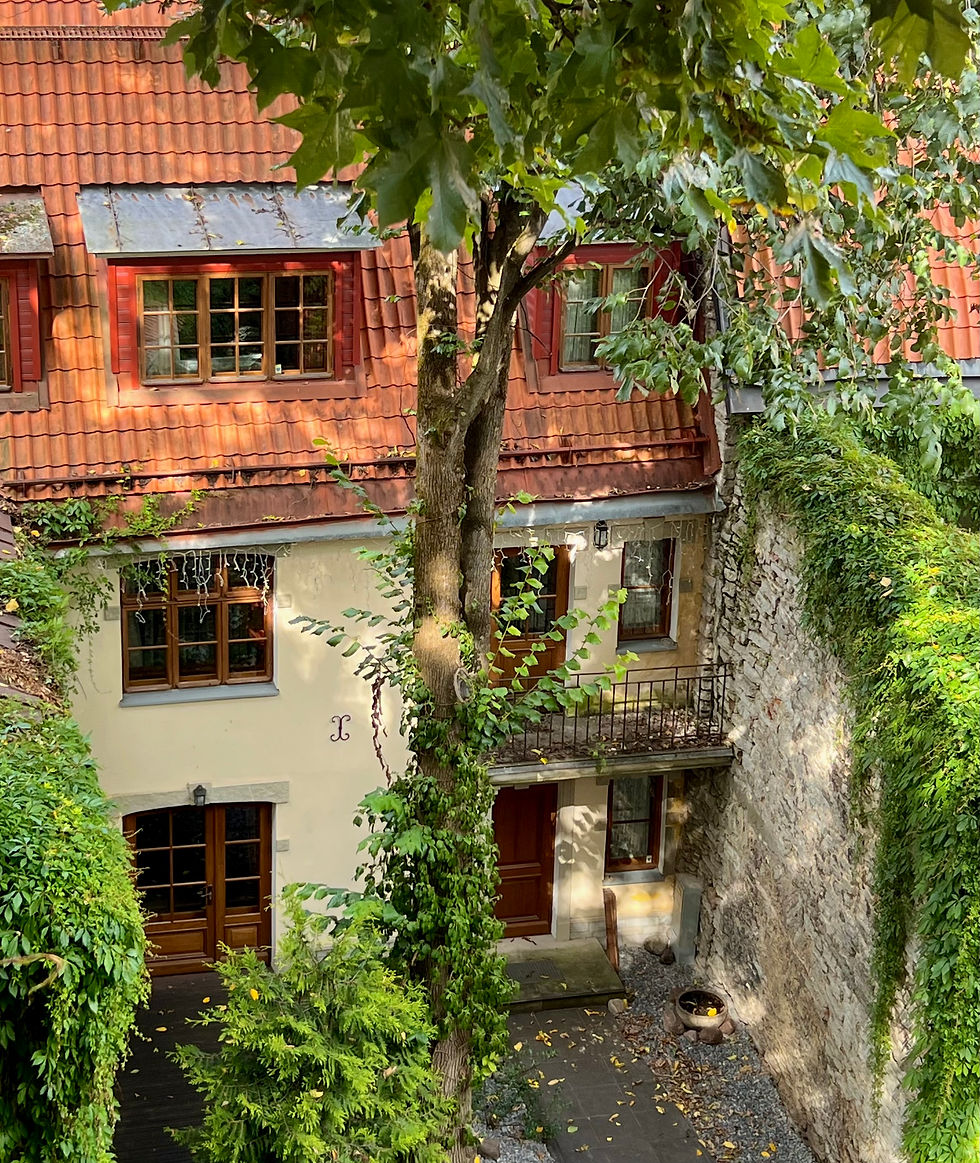
Tallinn offers a variety of sites to visit during your trip there. Naturally, one cannot miss taking a stroll through the historic old town which is a UNESCO world heritage site. In fact, I would recommend dedicating an hour or two on your first day in the city to just exploring the narrow cobblestone alleyways and admiring and photographing the vibrant medieval architecture. Located right in the old town is Kiek in de Kök, an interactive museum dedicated to the history of the stone wall surrounding the old town. This is one of Tallinn's most popular attractions and you have the opportunity to walk along the top of the walls, getting a beautiful glimpse of the medieval architecture from above. Lastly, a spot that many tourists miss is the Balti Jaam Turg. This is a market located just a short walk from the old town and city center. The environment will give you a glimpse into contemporary Estonian life and you can spend hours among the fresh fruit and vegetable stands, locally-made crafts or browsing the antiques. Can you spot old Judaica tucked away among the tables of Soviet-era treasures?
Despite sitting across the gulf from each other, Helsinki and Tallinn make an excellent trip combo you will remember for a lifetime. And while keeping shabbat and kosher isn’t as convenient and luxurious as in cities with more populated Jewish communities, with the right planning it isn’t impossible and you can make your time in these Baltic cities memorable. Every traveler has different priorities, whether you're interested in Jewish heritage, family history, nature, or simply finding the easiest way to keep kosher while traveling. If you’re planning a trip to Finland or Estonia, I can help tie all the loose strands together, mapping out a kosher-friendly itinerary that’s perfect for you. Just click the button down below to contact me and get your trip started.



Comments