How to Plan a Jewish Heritage Trip to Your Ancestral Shtetl
So you find out that your great grandfather lived in a small shtetl somewhere in eastern Ukraine and you’d like to go visit it. But the town name has changed since WWII, there are no airports nearby, no Jewish infrastructure is left, and nobody speaks any English. How can you realistically put this trip together and make the most of a meaningful journey back into your family history without ending up starving or stranded on the side of a rural road? If this is something that sounds familiar, keep reading to find out how Jewish heritage trips really work and what you’ve got to know in order to succeed at yours.
The first thing you need to do when planning your heritage trip is to make sure you’re going to the right place. A place listed as Hungary on your great-grandmother's birth record might be located in modern-day Slovakia, Ukraine or Romania, and the name your family used for the town may not be the name you'll find on a modern map. Similarly, you may know the name by its former Hungarian or Yiddish name while it has long been renamed by its current country. This is why it is extra important to check the details early in the booking process. Another point is that many town names may sound super similar or even share the same name, so identifying the shtetl—and the correct region—is essential before you start booking.
Once you’ve located and confirmed the town, the hard part isn’t over. In fact, the most difficult part is often getting to the shtetl. Something to know about these small towns in Central and Eastern Europe is that they’re often in isolated areas far from airports, major cities, and established tourist routes. Depending on the exact location, you may have a few options. One could be taking a bus or train to the village if that is available. Where public transportation exists, fares can be surprisingly affordable, although rural routes may be infrequent and require one or more transfers. A plus side to this is that you’ll get an authentic experience traveling through the country like a local and you’ll get a chance to take in the view of your ancestral land which you might have missed if you’d traveled there directly by car. Nothing will quite measure up to watching the snowy Carpathian Mountains, rushing Dnipro River, or lush Szalayka Valley pass by your window. If public transportation isn’t available, or the routes are sparse, you may need to rely on a transfer. Depending on the area and distance from the airport, this may be more costly, so it’s important to do your research well so as to get a fair price. Sometimes the most practical solution is a combination of public transportation and a private transfer, which can keep costs considerably lower than hiring a driver for the entire journey.
Your tickets are booked and the trip is confirmed. Now what? This is the point where you can stop and think: what am I looking to get out of this trip? Is there a synagogue you’d love to visit where your great-grandmother used to pray? A brook, river or mountain that your great-grandfather used to tell you about? Maybe a cemetery where generations of your bloodline have been buried for centuries? There are many directions a trip to a genealogical destination can lead you, and having expectations in mind can truly help you make the most of your time there. Of course if you have specific spots like the old house your ancestors lived in, the place where their business stood, the remnants of their synagogue, or something else, that can already give you a lead. Or perhaps you don’t have access to those details and would get to know the shtetl your family comes from on a community level. Maybe there’s a Jewish quarter they have walked through, an old Jewish cemetery, or a memorial to the former Jewish community. Local or regional archives may also hold records connected to the town's former Jewish community, although accessing them can require some planning ahead. Furthermore, perhaps you can gain some insight into how this town functioned before by talking to the locals and getting a feel of the culture and way of life.
Heritage aside, there’s still the basics that need to be covered like any other trip: food, accommodation, and Jewish observance logistics. Since most of the small towns in Central and Eastern Europe that once had thriving Jewish communities have little to no Jewish infrastructure left today, chances are that you won't find a kosher supermarket or restaurant waiting for you when you arrive. This is where you need to be smart about your options. Perhaps the larger city you're traveling through has a kosher shop where you can stock up for the trip. Sometimes you need to pack nonperishables from your home country and recognize that sometimes travel isn’t glamorous. If you’re lucky, there may be another city nearby with Jewish infrastructure that can make the trip much easier. For example, while visiting Mukachevo, nearby Uzhhorod may provide options for kosher food and Shabbat that aren’t available at the heritage destination itself. When it comes to accommodation, there often aren’t tons of options to pick from, but in certain areas you might have the choice of hotel or Airbnb or something similar. While this isn’t a luxury getaway, the beauty of such trips is that you can often get a real feel of the surrounding culture by staying in locally-owned hotels and villas. If you’re planning on staying over Shabbat, here’s what you need to know: some synagogues remain only as a museum or heritage spot and aren’t operational anymore. Likewise, some towns, villages, or cities that once hosted large communities, may have no Jewish life left or perhaps a community too sparse to even put a minyan together. If you don't want to cut your heritage trip short before Shabbat, you may consider researching the nearest Shabbat hospitality options and spending a day or two in another city. Of course if you pray without a minyan and you don’t mind making your own Shabbat, you can stay in the shtetl, given that you’ve checked ahead about the food situation, lighting, and room key. This would naturally give you an opportunity to explore the town at a slow pace—just strolling through the streets as your ancestors would’ve done on Shabbat a hundred years ago.

A very essential point to keep in mind during your shtetl visit is the language barrier. In small rural European towns, you can't assume that the people you need to speak with will know English. Checking into a hotel with a translation app is one thing. Asking an 80-year-old resident what they remember about the old Jewish cemetery is something else entirely. If in need of communicating with the locals, finding your way around, and moving between spots, a human translator may be more efficient than struggling your way with your phone. So be smart about your options, learn some basic phrases in the local language, and be prepared to step into a corner of the world where English is not taken for granted.
Lastly, aside from all the logistics, the figuring it out, the research, there is also an emotional element to returning to your family roots. After the devastation of the Holocaust, some will go back and find a pile of rubble where their family’s house used to stand. The spot where all the Jews would gather on Friday nights to sing L’cha Dodi may now be replaced by a shop or apartment building. You may speak to locals who will say that they have no clue that there was local Jewish history of any kind, while you know that the streets you’re standing on used to be bustling with Jewish merchants and craftsmen. The cemetery may be a bit out of reach and the inscriptions may be weathered or difficult to read. But the true beauty can lie in what does remain. And sometimes, it's one tiny remnant—a familiar surname carved into stone, an old Star of David above a doorway, or simply standing beside the river your grandfather spent his life describing—that suddenly turns a place on a map into part of your own story.
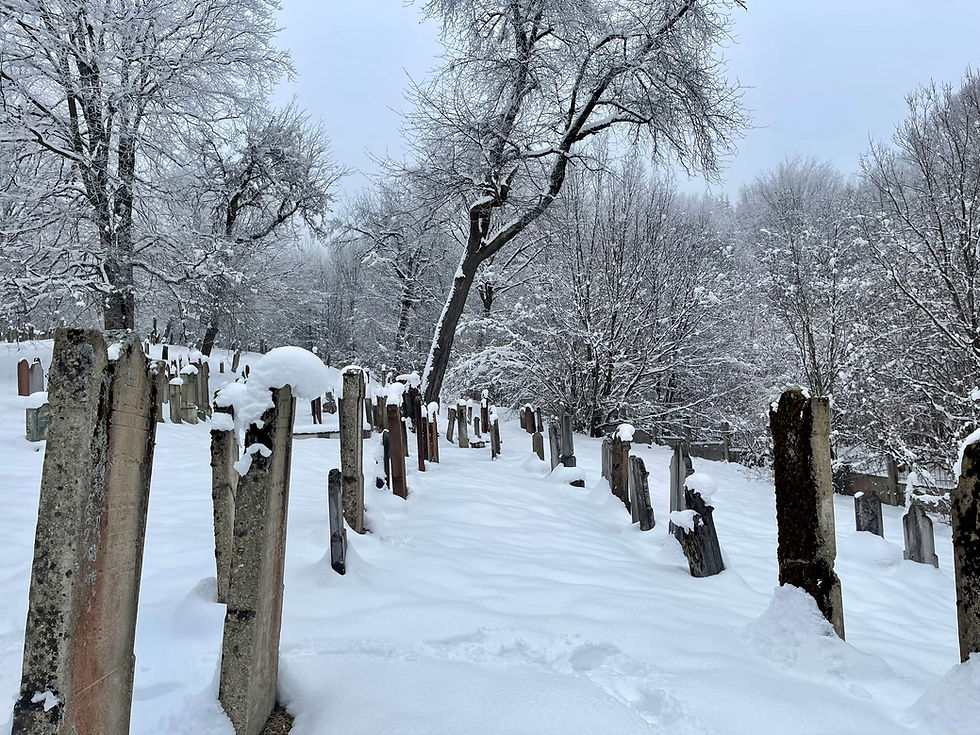
A heritage trip is so much more than logistics. It’s about fitting all the pieces together to revisit the stories of the past. And if putting all those pieces together feels overwhelming, Roots & Routes Travel can help you research and plan a heritage journey built around your family history, Jewish needs, and the places you want to rediscover. So do your research, find your shtetl, book those flights, plan for your Jewish needs, and get ready to step into an emotional journey you’ll never forget.


Comments